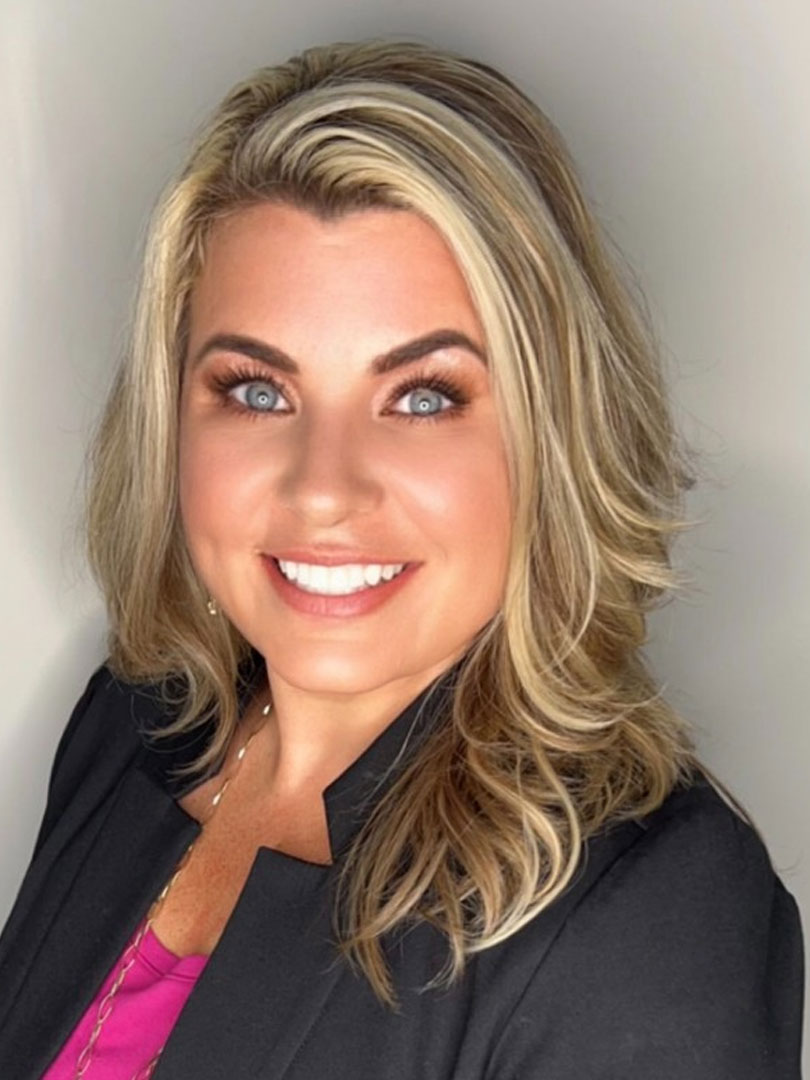
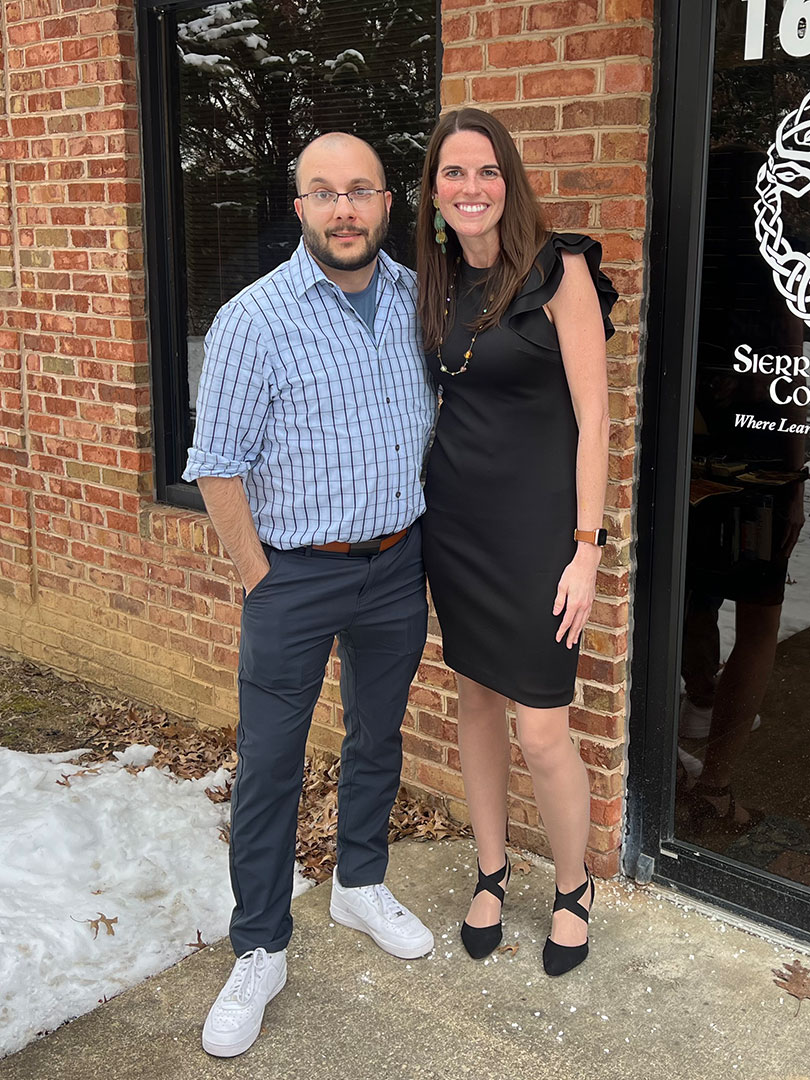
Kelly Botta

Topics:
- Service, Community & Civic Leadership

Topics:

Topics:

Topics:

Topics:
Episodes:

Topics:
Do you know those excuses that you tell yourself when something doesn’t go your way? Let’s go with a personal example that you might be able to relate to, male or female. Say you’re having trouble finding that person that is right for you and you explain it away with something like, “women only want men who drive expensive cars” or “men are only interested in women that look like models.”
These are examples of limiting beliefs – statements that you believe to be a fact even though there’s evidence proving otherwise – for example, many men find all female body types attractive, and there are plenty of women in relationships with country boys with pickup trucks.
These altered realities are holding you back from exploring all the possibilities that are available to you because you’re allowing negative thoughts to control your perspective.
The trick to overcoming your limiting beliefs requires taking the time to educate yourself and ask plenty of questions. It’s also important to try and figure out what fears and anxieties caused those negative thoughts in the first place.
When we put other people on a pedestal and tell ourselves that we’re incapable of doing what they do, we’re doing significant damage to our confidence.
Although it’s perfectly alright to admire another person, it’s unhealthy to assume that they are superior and that there’s no way to measure up.
Remember, people are just people and as they say, these people that you think so highly of put their pants on one leg at a time just like you. We all have different strengths and weaknesses. Although it might seem as though someone is “perfect,” no one is perfect, and if you think that they are, you likely don’t have the whole story.
Consequently, if you perceive someone as “better” than you, know that it’s not a matter of fact, but opinion and your perception is NOT reality.
There will always be someone with more expertise and more experience, and this has nothing to do with you. Two people born on the same day have very different life experiences that impact the people they become, the skills they have acquired, and the passions they develop over time. One is not better than the other.
“No one can make you feel inferior without your consent.” – Eleanor Roosevelt
Everyone has made mistakes, and it can be difficult to forget about events and circumstances that caused us pain, but we can’t let those mistakes keep us from moving forward and trying new things.
If you feel anxiety about your past, remember that not everyone recognizes the event the same way. In fact, chances are that your version of the story is entirely different (and probably much more exaggerated) than what other people may recall.
Keep in mind also that mistakes and failures act as a way for us to learn and grow. When you’re having trouble letting go, take a step back and ask yourself what lessons can be learned from the event.
Some of the most significant discoveries throughout history are a result of mistakes! It’s all a matter of perspective. Remember that the past doesn’t have to define you OR limit you.
“What lies behind you and what lies in front of you, pales in comparison to what lies inside of you.” – Ralph Waldo Emerson
The options we’re faced with when it comes to tackling our future can often feel overwhelming. Instead of throwing up your hands and saying, “I don’t know,” ask yourself a few of these questions instead:
“What do I need to learn?”
“Who could I connect with to help me learn more?”
“What would I do if I did know?”
“What am I doing to grow today?”
By changing the narrative from defeatist (“I don’t know”) to empowering and growth-driven, you’re actively shifting the way that your brain thinks and processes information. This small change can also help you start making real steps toward transformation and improvement, instead of wallowing in frustration and confusion.
The choice is yours; are you willing to change your narrative?
“Travelers, there is no path, paths are made by walking.” – Antonio Machado
Just because you’re not sitting in a classroom doesn’t mean that you can’t be learning new things. The biggest piece of dismantling the beliefs that are currently limiting you is taking the time to educate yourself about new things.
Each one of us has a library of memories and experiences that help to create our perceptions of reality. That reality can stay very small if we don’t actively seek out more information and experiences.
If your goal is to broaden your perception of reality, take time to read more articles, listen to more podcasts, and have more conversations. Find something that interests you, but you know little about it. You can set up alerts on your phone for news headlines or look for video tutorials on YouTube to teach yourself new skills.
A great way to start challenging your current perspective is to take some time to learn about history, the topic that I have struggled with as long as I can remember. Many of us get a very watered-down and summarized version of historical events in grade school that doesn’t cover content that is crucial in developing an understanding of the world that we live in today. After all, history does repeat itself – so it would be of use to learn more about it! I know I haven’t stopped trying!
“The capacity to learn is a gift; the ability to learn is a skill; the willingness to learn is a choice.“ – Brian Herbert
Our brains naturally develop stereotypes. Why? Because categorizing the things around us helps us to make sense of the world.
We stereotype based on experiences, which can either be crafted via real-life encounters or through perceptions in the media. As most of you know, the stereotypes that we see on TV aren’t always accurate or realistic.
To challenge your perception of the people around you, make it a point to talk to someone outside your current circle. This person could be of a different cultural, political, or religious sector – or it could be someone in your office with a different job title.
See if you can prove yourself wrong by engaging in active listening and by asking respectful questions. This conversation by no means has to be a debate – instead, the goal should be that you walk away still thinking about the discussion.
“When you change the way you look at things, the things you look at change.” – Dr. Wayne Dyer
If you’ve made it this far, you must be ready to put those limiting beliefs behind you. What’s the first step you are going to take? Don’t wait! Find an accountability partner, share this with them, and make them a part of your journey. I can’t wait to hear all you’ve achieved.
Leaders who embrace change have a dynamic team with a stronger and healthier culture, whereas organizations that aren’t open to change tend to BE stagnant and vulnerable to failure.
In other words, if you’re not willing to change, you’re not ready to lead.
When leaders frame change in the right way and take action to support that change, team members are much more likely to embrace it. And guess what? The need for change exists everywhere, no matter how successful the company or organization, and yours is no different. As a leader, you should constantly be asking yourself how to improve and be willing to test the waters when needed.
Once you do identify the need for change, reflect with your team about how to address that change. How does your team feel about the change? How can you support them? Do they have any questions?
Next, you must understand that people will be naturally resistant to change, and even if everyone appears to be on the same page at first, it’s going to be your job to usher people past the disruption and create a new status quo. Effective leaders are able to communicate change in a way that takes into account their team’s perspective, including their emotional well-being. In times of change make it a point to check in with emotions and concerns whenever possible.
We know that organizations must change in order to thrive in an always-changing market. In order to help your team (and yourself) stomach change in a manageable way, break down each step of that change into small steps. Do your best to map out any major hurdles and plan solutions for dealing with them.
The more that you map out your path, the easier the road will be!
Are you interested in the concept of change? Join our next in-person Lunch & Learn series as we take a deep-dive into Leadershift by John Maxwell where we will unpack 11 essential changes. The series will be held on Wednesdays from 11:30 AM – 1:00 PM at the Winchester Country Club in Winchester, VA. The series will begin on Wednesday, July 6 and end on Wednesday, August 16, 2021. To register, contact Sierra Learnership Collaborative at (540) 348-GROW, email at info@sierralearnership.com, contact us via our website www.sierralearnership.com, or via social media. We look forward to hearing from you!
After 10 years in public education, I reached a fork in the road where I could continue to expand my influence by moving into a role in administrative leadership or use the expertise I had acquired to create a unique business that aligns with my passion, helping others achieve their best. Sierra Learnership Collaborative brings to life my belief that effective leadership skills and lifelong learning are critical to one’s success. Growth, leading, and learning are collaborative processes which is where I come in.
We provide exceptional leadership speaking, training, and coaching services to youth AND adult learners who strive to experience lifelong personal and professional growth. Today’s youth must be given the opportunity to develop leadership skills early in life and given the tools necessary to make personal growth a priority. Also, today’s leaders must see the need for continued personal growth and professional learning to reach their full potential. So, whether you are a parent looking for an innovative approach to your child’s development in leadership, teamwork, communication, or organization OR a business leader looking for the tools you need to achieve your and/or your team’s definition of success, we will create a plan to meet your specific needs. Whether working with you individually, as a small group, or as an organization, together we will collaborate to achieve your goals.
It’s not enough to hire a fantastic team. If you want to truly boost productivity, you have to tap into the talents of each team member so that they can perform to their highest potential. So how do you get started?Here are a few tips:
Your team doesn’t have to be best friends with one another, but they do have to forge working relationships based on trust and respect. As a leader, it’s your job to provide the time and space to help build those interpersonal relationships. Luckily, you don’t need a huge budget or an elaborate plan to achieve this. Take some time to work on projects that encourage collaboration, communication, and allow everyone a chance to learn more about one another.Procrastination could be one obstacle to your productivity, but don’t worry, you’re not alone! According to research, 20 percent of the population is considered true, chronic procrastinators. Procrastination may be equated to laziness, but this couldn’t be further from the truth! Chronic procrastination often stems from a deep-seated emotion such as fear. Some fear failure, while others fear the unknown. No matter your reason for procrastination, identifying the cause is essential to achieving more and getting on with your day!
Join me for Eliminating Procrastination on Wednesday, May 26th from 12-1 PM for a Zoom Webinar to determine the underlying cause of your procrastination so you can implement the right strategy to move forward. Learn more and register here: https://sierralc.leadingthebest.com/CMWWEP0001

I provide exceptional leadership speaking, training, and coaching services to youth AND adult learners who strive to experience lifelong personal and professional growth. Today’s youth must be given the opportunity to develop leadership skills early in life and given the tools necessary to make personal growth a priority. Also, today’s leaders must see the need for continued personal growth and professional learning to reach their full potential. So, whether you are a parent looking for an innovative approach to your child’s development in leadership, teamwork, communication, or organization OR a business leader looking for the tools you need to achieve your and/or your team’s definition of success, I will create a plan to meet your specific needs. Whether working with you individually, as a small group, or as an organization, together we will collaborate to achieve your goals.
Once you do sit down and create a game plan that’s fleshed out with goals and dates, be sure to revisit those goals on a regular basis and check in with the folks who are responsible for accomplishing those goals.
A few things to keep in mind while you’re creating goals:
Be sure that each goal is accepted and recognized as important by everyone who will have to implement them. Don’t push forward a goal that your team isn’t excited about – take time to workshop it so that everyone feels an element of ownership to some aspect of it.
Don’t make the goals too easy. If there isn’t a bit of challenge involved, your team won’t feel motivated to use creativity to problem solve, there likely won’t be as much teamwork involved, and last but not least, there isn’t as much to get excited about!
Make sure that the goals are very clear. Stay away from imprecise or vague language, and be as specific as possible. Use beginning and end points ALWAYS.
Practice writing goals in S.M.A.R.T. format. Here’s what the acronym stands for:
S – specific (add as much detail as possible!)
M – measurable (will you be able to recognize or measure when you reach your goal?)
A – achievable (is there research or evidence to ensure that the goal CAN be achieved?
R – relevant (is this goal something we need?)
T – time-bound (is there a start and end date?)
Here’s an example of a good SMART goal: “Within two months, our blog traffic will add a total of 400 unique visitors by doubling our publishing frequency from two posts per week to four and by increasing our word count per blog from 800 words to 1,600 words.”
Here’s another: “In two months, we will boost total new lead acquisition by 10% by adding relevant CTAs and content offers to 50 pieces of existing content.”
I am motivated to educate as many people as possible, which is why I offer a myriad of events! From in-person educational experiences to virtual webinars and individualized coaching services, I encourage everyone to get involved with all of my offerings. Take a look at my upcoming Conquering Your Goals workshop here: https://sierralc.leadingthebest.com/CELT0001
Be sure to follow my business page on LinkedIn as well as Facebook to check out my daily videos and stay up-to-date on upcoming events.
Sierra W. Collins, Owner
Phone: (540) 348-GROW
Email: grow@sierralearnership.com
As humans, we aren’t perfect – far from it. Leading a team of imperfect humans is even more difficult. In order to rise to the occasion time after time and stay at the top of your game, you must strive to stay curious and learn from each experience you have, because your growth is directly correlated to your company’s growth.

1) Start questioning yourself – in a healthy way. Instead of spiraling into self-doubt, consider the motivations behind your actions, and try to dig deeper behind the reasons that you choose to do what you do. In other words, spend some time in self-reflection, just not in a negative way.
2) Work on your communication skills. As a leader, you’ll have to be a fantastic communicator. You need to be able to identify the personality and leadership style of colleagues and clients so that you can effectively communicate and avoid conflict. You should also be striving to make your ideas and thoughts clear to those around you because they’re worth sharing!

4) Create an environment of lifelong learning. As Rick Warren says, “The moment you stop learning, you stop leading.” Model a growth mindset in which you regularly push yourself outside of your comfort zone.
Is there something that you think you need to work on? If you are a lifelong learner that strives to become a more effective leader, Sierra Learnership Collaborative is there for you! Check out the topics below for the next 12 months of Webinar Wednesdays. Join us for $25/session or become a Webinar Warrior and attend all 12 for $199 (a savings of $101!!).
All Zoomed out? Join us for in-person mastermind groups, DISC Personality Profile and Leadership Style Workshops, and a variety of team-building experiences. Are you looking for an organization-wide event? I’ll come to you!

I provide exceptional leadership speaking, training, and coaching services to youth AND adult learners who strive to experience lifelong personal and professional growth. Today’s youth must be given the opportunity to develop leadership skills early in life and given the tools necessary to make personal growth a priority. Also, today’s leaders must see the need for continued personal growth and professional learning to reach their full potential. So, whether you are a parent looking for an innovative approach to your child’s development in leadership, teamwork, communication, or organization OR a business leader looking for the tools you need to achieve your and/or your team’s definition of success, I will create a plan to meet your specific needs. Whether working with you individually, as a small group, or as an organization, together we will collaborate to achieve your goals.
…and a member of the Accelerated Experience Committee, I genuinely enjoy the opportunity to build strong relationships with like-minded individuals and strive to add value to all I meet. I encourage you to reach out for a 1:1 or schedule a free 30-minute consultation to learn more about the variety of ways in which I can support you on your journey.